Science Summit
- event_available
- placeAustin (Main Campus)
- grade6 CPE Credits
- local_offer$175
Harvesting Fresh Ideas for the Classroom
Join us for the 1st Annual ESC Region 13 Science Summit!
Designed specifically for science educators, this dynamic professional learning experience brings teachers together to collaborate, share ideas, and grow their instructional practice. Through engaging, interactive breakout sessions, participants will explore innovative teaching strategies, exchange best practices, and participate in meaningful discussions that enhance science learning for all students.
Guided by our 2026 theme Harvesting Fresh Ideas for the Classroom this summit is all about cultivating inspiration you can take back to your campus and apply right away.
What to Expect
-
Interactive breakout sessions led by experienced educators
-
Collaborative discussions focused on classroom-ready strategies
-
Opportunities to share successes, challenges, and ideas with peers
-
Practical tools to strengthen student engagement and scientific thinking
Who Should Attend
-
Elementary, middle, and high school science teachers
-
Instructional coaches and campus leaders
-
Educators passionate about improving science instruction
Don’t miss this opportunity to connect with fellow educators, grow your professional network, and inspire the next generation of scientists.
Schedule
| 9:00-9:15 am | Welcome | |
| 9:15-10:20 am | Keynote Presentation | |
| 10:20-10:30 am | Visit Spotlight Sponsors/ Transition | |
| 10:30-11:30 am | Breakout Session 1 | |
| 11:30 am-12:30 pm | Lunch/Farmer's Market/Visit Spotlight Sponsors | |
| 12:30-1:30 pm | Breakout Session 2 | |
| 1:30-1:45 pm | Visit Spotlight Sponsors/ Transition | |
| 1:45-2:45 pm | Breakout Session 3 | |
| 2:45-3:00 pm | Visit Spotlight Sponsors/ Transition | |
| 3:00-3:30 pm | Panel Session | |
| 3:30-3:45 pm | Closing Remarks & Raffle |

Dr. Victor Sampson
Associate Professor of Science Education at The University of Texas at Austin
Dr. Victor Sampson is an Associate Professor of Science Education at The University of Texas at Austin whose research focuses on helping students engage in scientific practices and supporting teachers in creating equitable, literacy-rich learning environments, with his work widely published, grant-funded, and implemented in districts nationwide to improve student outcomes.
About the Presentation:
What if the most powerful professional learning you did all year started with a single question: How do people actually learn? This keynote invites participants to build, test, and revise their own models of learning — drawing on eight foundational insights from the National Academies' How People Learn II — and then connect those insights directly to the work of designing science instruction that prepares students to think, not just recall. Expect small-group discussion, collaborative sense-making, and a challenge that will follow you into every breakout session you attend.

Melissa Brown
In 2008, Melissa began her career teaching 8th grade science in New Braunfels ISD. In 2021, she became the Elementary Science Curriculum Specialist for NBISD. This transition allows her to share her passion for science education with others.
Amanda Dickson
Amanda Dickson is an Elementary Science Curriculum Specialist in Leander ISD with 16 years in education. She has played a key role in supporting new curriculum adoption and leading professional development focused on the transition to three-dimensional science instruction.
Mary Carnes
Mary Carnes is a passionate science educator with 13 years of experience teaching science fair at the elementary level and most recently as a middle school teacher who successfully piloted a student-driven science fair program with 7th grade honors students. Known for turning a traditionally dreaded project into an empowering research experience, she brings practical, classroom-tested strategies that bridge curiosity and the scientific method. Her work is rooted in TEKS alignment, student ownership, and a belief that every young scientist deserves the tools to thrive.
Kira Dyer
Dr. Kira Dyer is a veteran educator with 20 years of experience in science education. Currently serving as the Science Department Chair and a member of the leadership team at Sycamore Springs Middle School in Dripping Springs, TX, she brings a wealth of expertise to the district. She holds a Master's in Curriculum and Instruction from UT Arlington and a PhD in General Psychology from Northcentral University. A proud Dripping Springs resident and parent of two, Dr. Dyer is dedicated to blending pedagogical strategy with psychological insights to enhance student learning and faculty leadership.
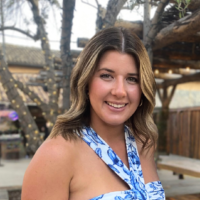
Nicole Hershey
Nicole Hershey has been teaching 4th–5th grade math and science at the University of Texas Elementary School in Austin, Texas since 2017. She is a Master Teacher and Teacher Incentive Allotment recipient and serves in a campus leadership role supporting instruction across grade levels. Nicole co-leads the science and math teams, aligning K–5 curriculum with research-based practices and strengthening school-wide instructional systems. Her work focuses on interactive science notebooks, student engagement, and equitable access to rigorous science learning. She also mentors new teachers and partners with UTeach and the UT College of Education to support future educators.
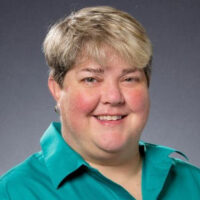
Jennifer Kaszuba
Jennifer is the K-5 Science Coordinator for Leander ISD and has many growing seasons under her belt. Her goal is to cultivate students' love of science and help them reap the best harvest they can.

Vanessa Holmes
With over 20 years in education, Vanessa Holmes currently serves as the Elementary Science Curriculum Coordinator at Hays CISD, where she leads the development and alignment of the K–5 science curriculum to the TEKS. She collaborates with campus leaders and teachers to ensure strong instructional practices, support assessment design, and facilitate professional learning. Her background includes roles as a district instructional coach, campus coach, classroom teacher, and RtI coordinator, shaping her practical, student-centered approach to improving teaching and learning.
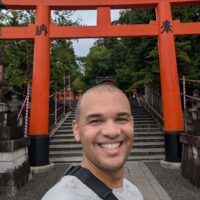
Kameron Koeffler
Mr. Kameron Koeffler is an award-winning STEAM teacher at the University of Texas Elementary School in Austin, TX. With 10+ years of elementary education experience, Mr. Koeffler has presented at multiple regional and national conferences, including NCTE-NCTM (2024), AERA (2025), and Region 13's Early Childhood Conference (2025). Additionally, he has led dozens of students to the Greater Austin Regional Science and Engineering Fair (GARSEF), with over 80% of students winning first place ribbons.
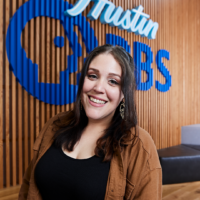
Melissa Holloway
Melissa Holloway is the Program Director of Play to Learn at Austin PBS, where she leads school readiness workshops for families with young children. She holds a Bachelor's degree in Early Childhood Education from Florida International University and brings 16 years of experience as a bilingual educator serving diverse communities across multiple states.
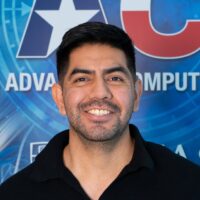
Joseph Vega
Joseph Vega is an Elementary Computer Science Education Specialist who has primarily supported teachers across grades K–5 in integrating instruction aligned with the currently adopted Technology Applications TEKS. More recently, he has begun working with middle school teachers and is expanding his work to support grades K–8 through the Launch_Middle School CS Initiative, which he leads. He previously worked as an instructional coach, supporting educators in strengthening instructional practices and curriculum implementation.
Session 1: 10:30-11:30
From Phenomena to Proficiency: Using Phenomenon-Driven Tasks to Assess Three-Dimensional Science Learning
Dr. Victor Sampson, UT Austin
What if assessment could show you not just whether students understand the three dimensions of science but how they are thinking with them? Phenomenon-Driven Tasks are a new, research-grounded approach to science assessment designed for the Texas TEKS that anchors student sensemaking in real-world phenomena, integrates SEPs, RTCs, and disciplinary content into a single coherent performance, and makes student thinking visible enough to drive instruction. Come learn how to use them for formative, educative, and summative purposes and why assessment and instruction don't have to be separate events.
Rooted in Reasoning: Cultivating Student Sensemaking Through Scientific Writing
Amanda Dickson, Leander ISD
Planting Sensemaking Seeds through Writing in Science. This professional learning session focuses on strengthening science instruction by integrating purposeful writing strategies that promote student sensemaking. Participants will engage in a structured process that m odels how to guide students through organizing ideas, developing explanations, and communicating scientific understanding using tools such as Short Constructed Responses (SCRs) and end-of-unit assessments. The session will flow from experiencing sample tasks as learners, to analyzing instructional strategies, and finally to planning for classroom implementation. By the end of the session, participants will be able to apply structured writing strategies to support student sensemaking in science and design and implement writing tasks that promote clear scientific explanations and reasoning. Practical tools, exemplars, and scaffolds will be shared to support immediate use across grade levels.
From Plot to Pot: PBS Science Content to Deepen Understanding and Engagement
Melissa Holloway, Austin PBS
In Full Bloom: Science Learning with PBS LearningMedia. Discover new and engaging ways to support science learners in your classroom with PBS LearningMedia! In this interactive session, educators will explore a wide range of FREE, curriculum-aligned resources, including videos, interactives, and lesson plans. These resources are designed to bring science concepts to life. We’ll begin with a quick overview of PBS LearningMedia, followed by guided exploration of available science content across grade levels, and wrap up with practical ideas for classroom integration and planning. You’ll leave with at least two ready-to-use science resources for next-day instruction! Learning Outcomes: Participants will navigate PBS LearningMedia to locate standards-aligned science resources. Participants will identify at least two ways to integrate multimedia tools into their science instruction.
Sowing the Seeds for Science Fair
Kameron Koeffler, UT Charter
From Field to Framework: Cultivating Inquiry for Elementary Science Fairs. This session is designed for upper elementary science teachers to provide a step-by-step process for planning an elementary science fair, communicating with educational stakeholders, and engaging 3rd-5th grade students into inquiry-based projects for the Greater Austin Regional Scientific and Engineering Fair (GARSEF). Teachers will have time to explore GARSEF resources and walk away with testable questions, ready- to-print checklists, and field-tested strategies for science fair success.
Session 2: 12:30-1:30
Harvesting Thinking: Daily Spiral Review that Grows Scientific Thinkers
Vanessa Holmes, Hays CISD
What if your daily review time could do more than just revisit content—what if it could grow confident, curious scientific thinkers? In this session, we’ll explore simple, powerful routines that help students make sense of science through data sets, diagrams, and 2D models. You’ll experience what this looks like in action as we move through quick visual analysis, meaningful discussion, and reflection strategies that bring student thinking to the surface. These routines fit naturally into warm-ups, intervention, or daily instruction and are designed to build momentum over time. The focus is on helping students truly see and think like scientists by strengthening their ability to interpret, analyze, and communicate scientific ideas. Learning Outcomes: Participants will implement daily spiral review routines that strengthen students’ critical thinking and scientific reasoning. Participants will use data sets, diagrams, and models to build students’ visual literacy and deepen understanding of scientific concepts.
Cultivating Scientific Language: Harvesting High-Yield Science Vocabulary
Jennifer Kaszuba, Leander ISD
Front-loading vocabulary can sometimes choke off the process of “figuring things out” and may plant unnecessary barriers that keep emergent multilingual students from putting down roots and fully blooming in class discussions. Instead, vocabulary is introduced strategically throughout units and lessons, ensuring students’ ideas are watered, nurtured, and given space to grow at just the right time. The goal of this session is to grow our collective understanding of how to support vocabulary development without weeding out sensemaking and wonder. Teachers and district leaders alike will leave with practical ideas ready to plant and cultivate right away.
Connecting Inquiry into Core Memories
Melissa Brown, New Braunfels ISD
Come join us for Connecting Inquiry into Core Memories! With the new Science TEKS, we are shifting science from learning about to figuring out. Come learn strategies on how to get students to make core memories first, then make connections allowing students to create a deeper understanding of content that will last. This session is designed for K-5 but is applicable to all grade levels.
Rooted in Differentiation: Planting Ideas and Harvesting Understanding through Interactive Journaling
Nicole Hershey, UT Charter
This workshop explores how interactive science journaling serves as a flexible framework for differentiation rooted in Universal Design for Learning (UDL). Participants will examine how to support all learners— including SPED students, MTSS Tier 2 and 3 learners, emergent bilingual learners, and Tier 1 students—within rigorous science instruction without additional resources. Through teacher and student journal exemplars, educators will explore four key components of effective interactive journaling: developing STEM identity, implementing organizational systems that support student independence, using the “Input/Output” model to balance explicit instruction with differentiated application, and designing student-choice “menu items” that provide varied pathways for demonstrating understanding. Learning outcomes: We will apply UDL strategies and organizational tools to ensure rigorous application of content for all learners. We will explore the integration of key interactive journaling components to streamline organization, engagement, and accessibility. We will adapt a menu of 20+ application activities to ensure immediate implementation for our own classrooms.
Session 3: 1:45-2:45
From Seed to Showcase: Growing Science Fair Winners in Your Classroom
Mary Carnes, Lake Travis ISD
From Seed to Showcase: Cultivating Student-Driven Science Fair Success. Science fair doesn’t have to be a project parents do for their kids — it can be one of the most meaningful research experiences a student has. In this hands-on workshop, K–5 and secondary teachers will discover how to transform science fair into a genuine, student-led journey grounded in the scientific method and aligned to TEKS. Participants will explore a curated collection of high-yield, judge-approved experiments with proven track records, walk through a scaffolded classroom planning calendar built for both elementary and secondary timelines, and uncover exactly what judges are looking for. Drawing from 13 years of science fair experience and a successful middle school pilot program, this session equips teachers with a ready-to-use digital toolkit — including graphic organizers, rubrics, and student planning guides. Learning Outcomes: Participants will be able to implement a step-by-step science fair planning calendar tailored to their grade band (elementary or secondary) and guide students in selecting strong, inquiry-based research questions that align with judging criteria and TEKS standards.
Cultivating Scientific Language: Harvesting High-Yield Science Vocabulary
Jennifer Kaszuba, Leander ISD
Front-loading vocabulary can sometimes choke off the process of “figuring things out” and may plant unnecessary barriers that keep emergent multilingual students from putting down roots and fully blooming in class discussions. Instead, vocabulary is introduced strategically throughout units and lessons, ensuring students’ ideas are watered, nurtured, and given space to grow at just the right time. The goal of this session is to grow our collective understanding of how to support vocabulary development without weeding out sensemaking and wonder. Teachers and district leaders alike will leave with practical ideas ready to plant and cultivate right away.
Harvesting the Light: Growing Student Understanding with the micro:bit’s Light Sensors
Joseph Vega, TACC
Investigating Light with the micro:bit. This session highlights how the BBC micro:bit can be used to support evidence-based discussions and deepen conceptual understanding in science. Using a lesson focused on absorption, reflection, and refraction, participants examine the exploration process from a student perspective. Learning Outcomes: Recognize how the micro:bit supports both student engagement and comprehension. Identify inquiry strategies that promote curiosity in science.
Moving the Needle: Enhancing Vocabulary Through Music, Movement, and Peer-Mediated Instruction
Kira Dyer, Dripping Springs ISD
Tired of rote memorization that doesn’t stick? Join us to explore the “Musical Vocabulary” strategy, a high-energy framework designed to move students from passive recognition to active synthesis. This session demonstrates how to use music-cued movement and “faded scaffolding” to deeply encode academic terms across any subject area. The Flow: Participants will experience a live demonstration of our three-round cycle: Visual Hook — connecting images to terms (Dual Coding); Verbal Recall — retrieving terms from definitions (Retrieval Practice); Synthesis — creating real-world scenarios (Elaborative Encoding). We will conclude with a “Plug-and-Play” template for immediate classroom implementation, covering adaptations for Math, Science, ELA, and Music. Learning Outcomes: Implement a 3-round instructional cycle that transitions students from visual identification to complex conceptual application. Analyze the cognitive research (Dual Coding and Embodied Cognition) that supports movement-based retrieval practice.